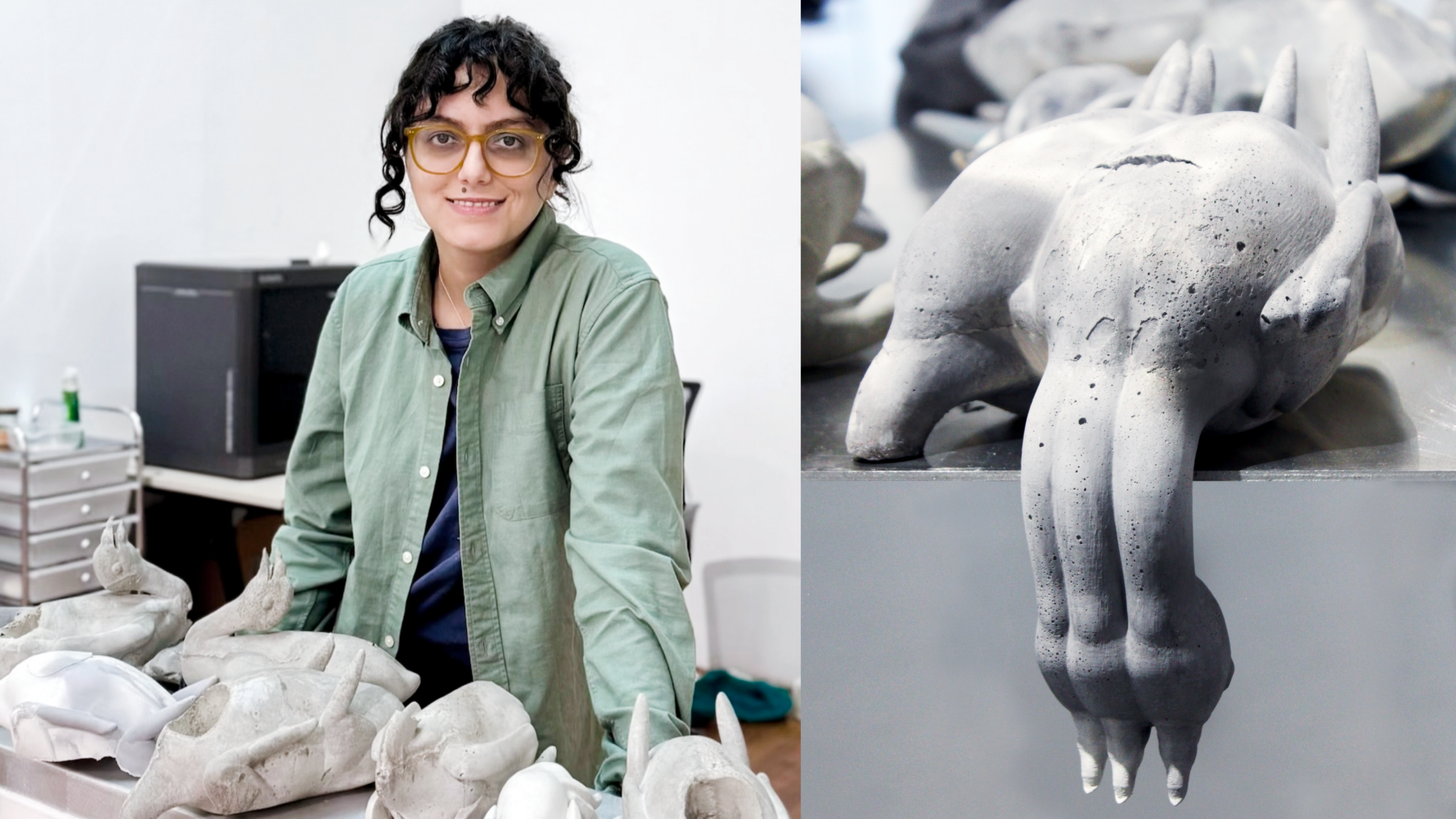
Shima Ta Bakhshj sat down with BCA marketing and communications manager Maria Rodriguez to dive deeper into her art work, ahead of her solo exhibition in the Mills Gallery Project Room opening September, 25, 2026.
Shima Taj Bakhsh is warm, friendly and always ready to collaborate. Born and raised in Iran, she is no stranger to the liminalities of life and death, and their innate connectivity to our everyday existence. These are the themes of her exhibition titled Soft Collapse, which centers around a shifting persona born from an anonymous gravestone engraved solely with the word “Kaboutar (کبوتر)” which means pigeon in her native language of Farsi (Persian). What started as an unknown person unfamiliar to anyone in her surrounding area, Soft Collapse is the result of a four year process that combines research, history and fiction.
Over cozy cups of coffee mid-afternoon at the Caffè Nero across the street from the BCA, Shima opened up about being an ‘interdisciplinary installation artist,’ interviewing political prisoners, and going from being afraid of birds to creating an entire collection of cement pigeons. When asked how she was feeling about the upcoming exhibition opening she smiled excitedly, breathing a sigh of relief that a project she began so long ago, is not only nearing its end, but so was the most grueling part of any exhibition— install week.
She spoke about the core message of her work being the different ways we as humans and pigeons co-exist and communicate with each other. The pigeon, known once as a mighty messaging partner of the human, has now become a sullied grievance, especially in concrete inner city landscapes such as Boston. Similarly, the surname Kaboutar was a once common name in her homeland, and has now become increasingly rare. Who would name their child Pigeon, and why? Are questions she pondered. Her innate curiosity about the gravestone steered her down a rabbit hole of research that lead her to meeting, and interviewing the few people she could access with ties to the surname Kaboutar “a poet, a warrior, a burglar, and a political prisoner” all of “whose stories converge on themes of survival, resilience, imagination, and navigating oppressive social and political constraints.” When asked why it’s important for this type of work to be shown now, she spoke to the importance of platforming complex stories and narratives. Pigeons through time have adapted to the conflicting human need for endless consumption.
In between sips, she recounted the story of the political prisoner she spoke to, who was known for receiving information from the outside world during their period of solitary confinement; through secretly passed newspaper clippings. These prisoners, like everyday pigeons, navigated a complex system of hidden communicators in plain sight. Through the advantage of flight, pigeons, much like artists and rebels alike, always find a way to disperse information in existences that are constantly asking them to be in a position of endless advancement, ‘kill or be killed.’
“I have brought these narratives to form through interdisciplinary installations, incorporating elements of architecture, video, sound, and sculpture.” When asked how she knows when to stop creating and researching after so much time on a project, she answered: “artists never stop.”
Join us for the opening receptin of Soft Collapse on Friday September 25 from 6-9 PM.