
Carmen S. Rizzo (she/her), from São Paulo, Brazil, is a dance artist who is inspired by scientific perspectives on themes of universal human experiences. She completed the 8-year professional training program at Escola de Dança de São Paulo, culminating in experience with Balé da Cidade de São Paulo and Ballet Stagium. She graduated from the Boston Dance Theater trainee program and from Manhattanville University with a Summa Cum Laude and highest honors double degree in Dance and Theatre (Dance concentration) and Business Management (Psychology minor).
She has worked with choreographers such as Shannon Gillen, Shawn Bible, Mike Esperanza, Leah Ives, Michaela McGowan, Yoshito Sakuraba, Julia Ehrstrand, Max Stone among others. She also performed works by Akram Khan, Martha Graham, George Balanchine, Itzik Galili, Yin Yue, Michaela Taylor, Rena Butler and Ohad Naharin and has been featured in performances across the east coast and internationally. Carmen’s dance films have been showcased in festivals such as Homegrown, Shut in Dance Festival, Manhattanville’s Film Festival and the DFA College Exchange (Lincoln Center, NY).
A recent guest artist at her alma mater, she has also had the opportunity to present her own work in festivals such as ArtBeat, NACHMO Boston, Salem Arts Fest, Dance for World Community, Boston WiP, Clio Art Fair, and in her first two self-produced shows. She has recently performed in works by KAIROS Dance Theater, Kristin Wagner, Grant Jacoby, Chavi Bansal, Rachel Linsky, Alexandria Nunweiler and Madison Florence in the Boston area and beyond.
She is also currently a dance teacher, Pure Barre instructor, BTPT and AAHC Social Media Manager. Carmen is a proud and honored recipient of the Boston Moving Arts’ Creative Soul Residency 2023-2024, Boston’s Opportunity Fund 2024, Rough Drafts 2025, WeCreate Fellowship 2025, New England Dance Fund 2025, and Next Steps for Boston Dance 2026-2027.
__________________________________________________________
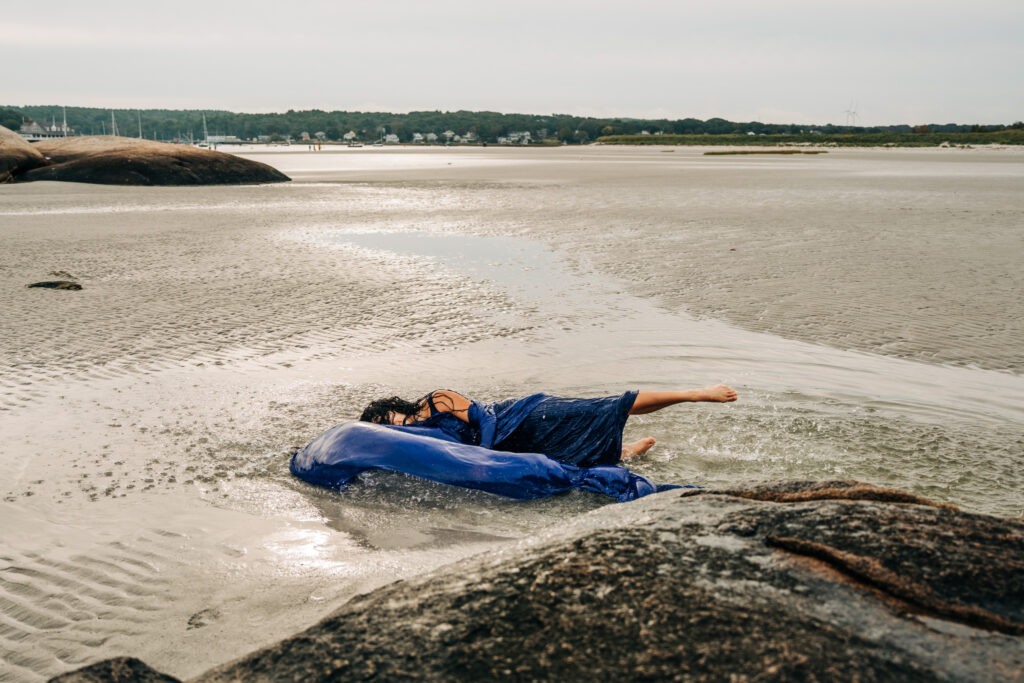
Sand has been keeping track of time since before we knew what time was. The amount of sand in an hour glass, for instance, can determine how much time has passed. Similarly, the texture of the sand at a beach can also indicate how much time that beach has been around. Through different weather and landscapes, every grain is shaped by experience, as are we.
It’s intriguing to think that sand is formed by nature’s “leftovers”: rocks, minerals and bits of organic materials just continuously bumping and rubbing against each other due to rain, tides, winds, etc. The softest sand is the one that has been through the most friction – a parallel that can be drawn to human experiences, as many times the people that have been through the roughest patches are the gentlest, the easiest to approach and the most welcoming. However, there’s also the jagged grains of sand; the ones that may have had the most recent jarring impact; the ones that hurt to touch. Much like people who have recently been through an abrupt experience, these grains can be sharp and cause tremendous pain to those who come close.
I’m also drawn to the dichotomy of the use of sand. Sand, in large quantities, is used to provide support, stability, weight, while also, when in smaller quantities or in uncontained environments, is so unstable, light and unpredictable. I am interested in exploring how the weight of sand can be carried, and what purpose it is serving as a metaphor for the experiences we all carry with us; the moments that shaped us, that brought some sense of grounding and stability, that hurt us, that reminded us what we’re capable of. I’m equally interested in exploring what the release of that weight looks like. If you are carrying sand (your memories and experiences), what parts can be contained and what parts can’t? What happens if suddenly you start dropping the sand you were once carrying? Do you share it with someone else and make your load lighter while maybe messing with someone else’s space?
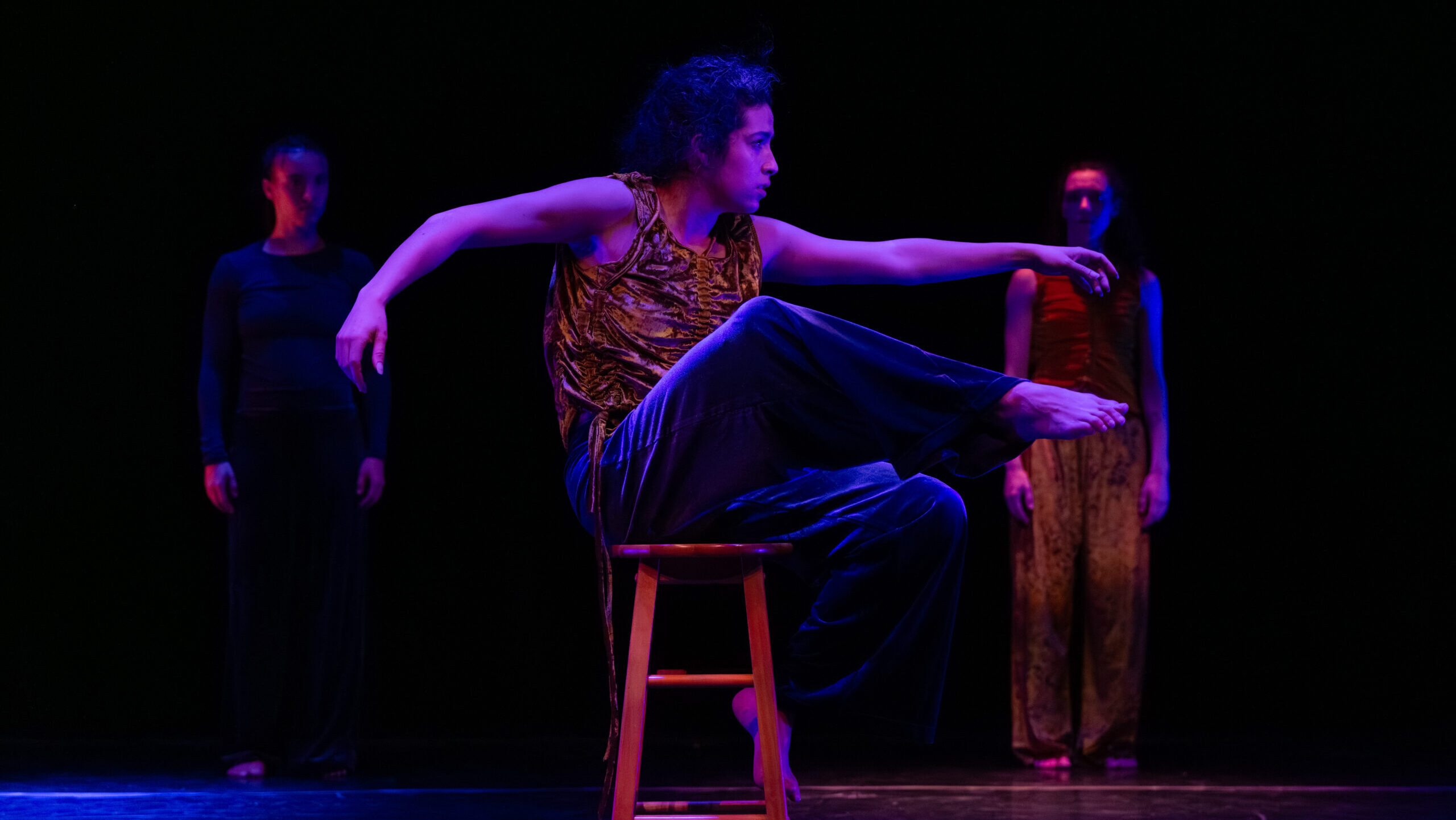
This contemporary dance explores the weight and weightlessness of sand as a metaphor for human trajectories and stories. Inspired by the physics and biology behind this abundant natural element, I aim to explore how universal human experiences – feeling unstable, being shaped by friction, understanding the power in numbers, etc. – can be connected to sand.